 EN
The Architectural Evolution of Custom Automotive Footwork in Modern Car Culture and Engineering Practice
When building a high-performance machine, selecting the right set of wheels proves just as critical as mapping the engine management system or upgrading suspension damping components. Over years of hands-on consulting alongside professional fabricators, suspension tuners, and track-day builders, a recurring technical debate emerges across global garages: monoblock versus two-piece versus three-piece wheels. Many drivers view wheels strictly through a superficial aesthetic lens, yet experienced tuners recognize that wheel architecture dictates unsprung weight, rotational inertia, structural load ratings, and long-term durability. Navigating this intricate landscape requires looking past flashy exterior finishes to understand the underlying metallurgy, engineering compromises, and real-world trade-offs separating monoblock, multi-piece, and modular designs across diverse driving environments, weather conditions, track conditions, and global automotive subcultures worldwide every single day without exception.
The Unyielding Strength and Purity of Monoblock Wheel Construction Methods
To understand the spectrum of wheel architecture, exploring the monoblock approach provides a solid foundational perspective. Monoblock wheels are crafted from a single solid block of aluminum—typically aerospace-grade forged alloy—utilizing high-tonnage hydraulic presses and subsequently shaped on multi-axis CNC milling centers. Because the barrel and the face form one continuous, seamless piece of metal, monoblock wheels deliver maximum structural rigidity, exceptional impact resistance, and the absolute lowest possible unsprung weight for a given design geometry. As leading automotive engineering publications frequently highlight, the elimination of joints, seals, or hardware minimizes potential failure points under severe lateral g-forces. This makes monoblock construction the ultimate choice for track-focused cars and high-power supercars where split-second steering response, crisp directional changes, and maximum rotational efficiency remain absolute priorities during high-speed cornering maneuvers and endurance racing events. Furthermore, the absence of separate outer lips or barrels ensures that cleaning brake dust and maintaining surface finishes remains remarkably straightforward for daily driving or aggressive track days alike.
The Adaptable Balance of Two-Piece Wheel Architecture and Modular Fitment
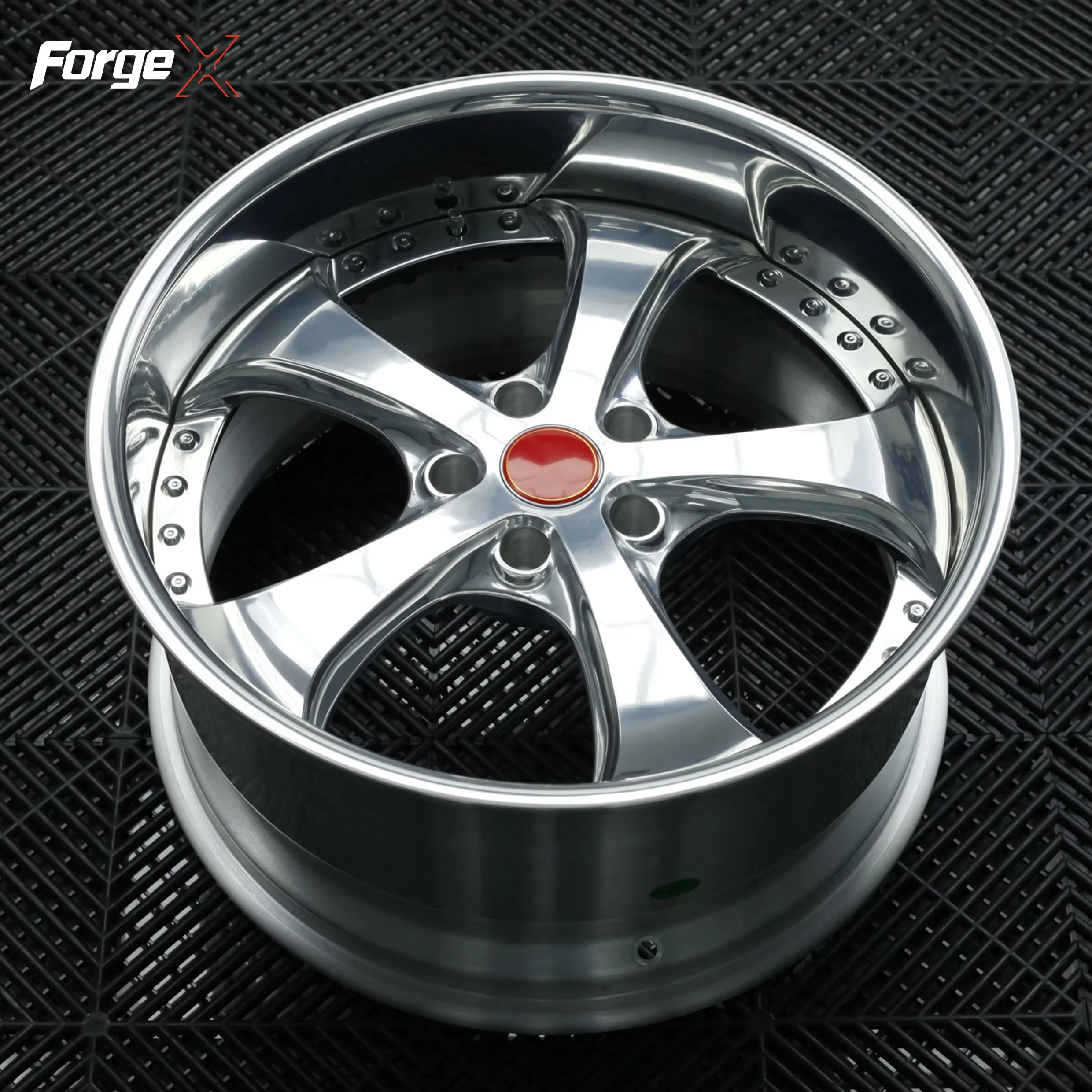
Moving toward modular versatility, two-piece wheel configurations offer a compelling middle ground for enthusiasts seeking customization without sacrificing structural integrity. A two-piece wheel typically consists of a forged center disc welded or bolted to a single continuous outer barrel assembly, or alternatively, a spun barrel mated to a face featuring integrated lip structures. This hybrid design allows manufacturers to offer a broader range of custom offsets, backspacings, and face finishes while utilizing standardized barrel components to streamline production. In real-world workshop applications, two-piece setups strike an ideal balance for modified street cars and high-end grand tourers that require wider stances or aggressive brake clearance adjustments without stepping up to the complete modular complexity of a three-piece setup. The engineering compromise involves a slightly higher weight penalty compared to monoblock variants, yet the gains in custom fitment flexibility make them exceptionally popular among street tuners worldwide. Additionally, this hybrid assembly method simplifies inventory management for specialized wheel builders while providing robust everyday reliability across unpredictable urban roadway hazards.
The Modular Versatility and Customization of Authentic Three-Piece Designs
At the pinnacle of bespoke craftsmanship and personalized styling lie authentic three-piece wheels. Comprising an inner barrel, an outer lip, and a forged center disc bolted together using high-tensile, aerospace-grade hardware, three-piece construction unlocks limitless architectural customization. As noted in professional custom vehicle journals, this modular philosophy allows builders to tailor every millimeter of width, offset, and lip depth to match widebody aero kits and unique chassis geometry precisely. Furthermore, practical repairability stands out as a major operational advantage; if an outer lip sustains damage from a severe pothole or an unexpected track mishap, owners replace only the damaged component rather than discarding the entire wheel assembly. Achieving this extraordinary level of custom geometry requires rigorous finite element analysis testing and stringent quality control, ensuring that multi-piece configurations deliver both breathtaking aesthetics and uncompromised safety standards. Moreover, the ability to mix and match custom anodized, polished, or painted finishes across individual components empowers enthusiasts to create truly one-of-a-kind automotive statements.
Comparing Weight, Performance, and Maintenance Across Wheel Types
Evaluating which architectural setup fits a specific automotive build requires weighing performance physics against daily practicalities. Monoblock wheels provide superior stiffness-to-weight ratios and effortless maintenance, making them ideal for drivers prioritizing pure track lap times and minimal upkeep. Two-piece setups offer a versatile compromise for street-and-strip enthusiasts seeking customized widths combined with reliable everyday durability. Three-piece configurations excel in bespoke customization, aesthetic impact, and modular repairability, though they demand periodic hardware torque inspections due to their multi-component assembly nature. Understanding how rotational mass, unsprung weight, and thermal dissipation interact with each wheel type helps drivers align their purchasing decisions with actual driving habits, whether navigating rough urban commutes or pushing performance limits on closed racing circuits across different motorsport disciplines and competitive regional championships. Evaluating these parameters carefully prevents costly mismatched upgrades and ensures optimal handling dynamics under varying load conditions.
Elevating Your Vehicle Architecture with Forgex Speed Manufacturing Excellence
Choosing the ideal wheel architecture—whether prioritizing the uncompromising structural purity of monoblock designs, the versatile fitment of two-piece setups, or the bespoke modular artistry of three-piece configurations—demands a manufacturing partner capable of executing complex engineering standards with absolute precision. This is precisely where Forgex Speed establishes global industry leadership. By harnessing advanced aerospace-grade forged aluminum, cutting-edge multi-axis CNC milling centers, and rigorous finite element analysis testing protocols, Forgex Speed delivers exceptional custom wheel solutions tailored precisely to any vehicle architecture. Whether projects require ultra-lightweight monoblock track rollers, versatile two-piece setups, or highly customized three-piece wheels backed by robust production capacity and comprehensive supply chain services, Forgex Speed guarantees absolute precision, safety, and timeless style on any global road or racing circuit.
Table of Contents
- The Architectural Evolution of Custom Automotive Footwork in Modern Car Culture and Engineering Practice
- The Unyielding Strength and Purity of Monoblock Wheel Construction Methods
- The Adaptable Balance of Two-Piece Wheel Architecture and Modular Fitment
- The Modular Versatility and Customization of Authentic Three-Piece Designs
- Comparing Weight, Performance, and Maintenance Across Wheel Types
- Elevating Your Vehicle Architecture with Forgex Speed Manufacturing Excellence