 EN
The Illusion of Universal Wheel Fitment
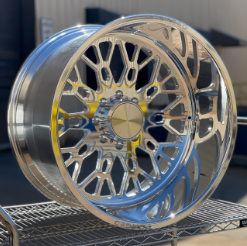
When upgrading a vehicle's exterior appearance, stance, or track performance, automotive enthusiasts, fleet managers, and garage builders frequently encounter the tempting promise of universal or one-size-fits-all wheel fitments. In hands-on workshop experience, professional garage builds, and rigorous track-side troubleshooting sessions, however, we consistently witness the aftermath of these risky shortcuts: severe brake caliper rubbing, unstable steering feedback, excessive road vibrations, and premature suspension wear. Forged wheels represent the absolute pinnacle of modern automotive engineering, offering unmatched tensile strength, superior structural integrity, and exceptional weight savings compared to traditional manufacturing methods. Yet, pairing these high-performance masterpieces with generic, mass-market fitments entirely defeats their purpose. True automotive performance demands exact geometry, where every single millimeter of offset, rim width, and center bore is calculated precisely for a specific vehicle chassis rather than forced to fit a wide range of different makes and models.
The Anatomy of Precision: Why Forged Wheels Demand Exact Tolerances
To thoroughly understand why universal fitment options fail, one must examine the meticulous engineering and material science behind high-grade forged wheels. Unlike mass-market gravity casting or low-pressure casting, which typically produces porous metal structures with thick, heavy walls, aerospace-grade aluminum subjected to heavy-tonnage forging creates an intensely dense, grain-aligned molecular structure. This superior material strength allows engineers to design thinner, lighter spokes and barrels that drastically reduce unsprung weight, thereby improving acceleration, braking response, and suspension articulation. However, because forged wheels are significantly stiffer and engineered to handle extreme cornering and braking loads without flexing, they leave zero margin for geometric error. If the hub-centric bore or backspacing deviates by even a fraction of a millimeter from factory specifications, the wheel fails to seat perfectly square against the rotor hat, creating micro-vibrations that transfer destructive harmonic frequencies straight through the steering column and suspension components.
The Hidden Dangers of Spacers and Multi-Fit Bolt Patterns
Many aftermarket wheel setups attempt to bypass custom fitment limitations by utilizing multi-drill bolt patterns and thick, universal wheel spacers to push the wheels outward. While these aftermarket items offer temporary convenience and low initial cost, they introduce critical mechanical risks. Multi-drill patterns weaken the core hub mounting pad by removing vital structural material surrounding the bolt holes, increasing the risk of cracking under extreme stress. Furthermore, bolt-on or slip-on spacers increase the effective leverage arm acting directly on wheel studs and hub bearings, multiplying shear stress during heavy acceleration, aggressive cornering, and emergency braking forces. According to leading automotive chassis safety standards, relying on generic spacers compromises load-bearing efficiency, frequently leading to loose lug nuts, stud fatigue, and catastrophic wheel separation during high-speed track driving or heavy-duty towing operations.
Bespoke Engineering: Solving Complex Fitment Challenges
Modern vehicles—ranging from European sports sedans equipped with massive carbon-ceramic brakes to modern high-performance electric vehicles and heavy-duty utility trucks—feature exceptionally complex suspension geometries and tight clearance envelopes that make universal solutions completely obsolete. Overcoming these hurdles demands bespoke engineering and advanced computer-aided design (CAD) validation, including Finite Element Analysis (FEA) to simulate real-world stress conditions under heavy loads. By utilizing advanced manufacturing techniques, engineers can mill custom offsets, deep concave profiles, and precise brake-clearing barrel contours directly into the forged monoblock or multi-piece structure. This custom approach eliminates the need for hazardous aftermarket spacers, preserves optimal structural load paths, and ensures a seamless, vibration-free ride straight out of the box.
Translating Technical Precision Into Brand and Commercial Value
Navigating complex vehicle fitment demands a manufacturing partner who understands both the artistic nuances of vehicle styling and the rigorous technical standards of global automotive safety regulations. Forgex Speed leverages state-of-the-art high-tonnage forging presses, rigorous in-house engineering validation, and comprehensive custom-fitment capabilities to deliver world-class monoblock, two-piece, and three-piece forged wheels. From exact, millimeter-perfect offsets for exotic sports cars to heavy-duty load-rated applications for full-size trucks and SUVs, Forgex Speed provides reliable OEM, ODM, and private-label supply chain solutions that empower distributors and performance brands worldwide. By combining uncompromising material science with flawless custom engineering, Forgex Speed transforms complex fitment challenges into lasting commercial advantages and unshakeable brand trust for industry partners.