
 EN
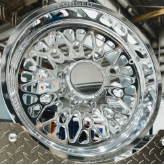
Demystifying the Staggered Wheel Setup
When enthusiast drivers, luxury vehicle owners, and professional race tuners look to elevate both the visual stance and dynamic capability of high-performance automobiles, one specific configuration consistently stands out as the ultimate upgrade: the staggered wheel setup. By definition, a staggered fitment utilizes wider wheels and corresponding wider tires on the rear axle compared to the front axle. In hands-on workshop experience, professional garage builds, and rigorous track-side tuning sessions, countless automotive projects demonstrate how this setup instantly transforms a vehicle’s road presence, giving it an aggressive, planted look while shifting the vehicle's dynamic behavior in profound ways. Originally popularized by European sports car manufacturers, supercar builders, and high-horsepower rear-wheel-drive platforms, the staggered layout is specifically engineered to harness immense engine power effectively. However, successfully executing this modification requires meticulous calculation to balance aesthetic aggression with precise mechanical harmony across all four corners of the chassis.
The Physics of Staggered Fitments: Traction and Handling Dynamics
To truly appreciate and master a staggered wheel configuration, one must examine the fundamental physics governing tire contact patches, weight transfer, and rotational inertia. Under heavy acceleration, a rear-wheel-drive vehicle experiences significant weight shift toward the rear axle, reducing the load on the front steering wheels while overloading the rear drive tires. Equipping wider rear tires substantially increases the physical contact patch with the pavement, maximizing longitudinal traction to put high horsepower down to the asphalt without inducing excessive wheel slip or premature rubber degradation. Furthermore, the wider rear track enhances lateral grip during aggressive cornering, helping high-performance cars carve through apexes with confidence and stability. However, this mechanical setup inherently alters the vehicle's natural balance by introducing a controlled amount of understeer, ensuring that the rear end remains firmly planted and highly predictable even when driven near its absolute limits on the track.
Managing the Risks: Suspension Geometry and Electronic Aids
While the performance and visual gains of a staggered setup are undeniable, adopting this configuration introduces distinct engineering challenges that require careful navigation and professional foresight. Because the rear tires are wider and frequently feature different outer rolling diameters, aspect ratios, or sidewall profiles compared to the front, vehicle owners cannot rotate their tires in the traditional front-to-back pattern, which naturally accelerates overall tire wear and increases maintenance costs. More importantly, modern luxury and sports vehicles rely heavily on complex electronic stability control, anti-lock braking, and advanced all-wheel-drive systems calibrated precisely by the factory to specific rolling circumferences. Altering front-to-rear overall diameters outside acceptable tolerances can trigger false traction control interventions, upset torque-vectoring computers, or overheat center differentials. Chassis experts and professional builders emphasize that precise offset calculation, correct tire sizing, and thorough mechanical testing are mandatory to protect critical drivetrain components from premature failure and electronic faults.
Why Precision Manufacturing Trumps Generic Workarounds
Many automotive enthusiasts attempt to achieve a desirable staggered stance by purchasing generic, mass-produced cast wheels paired with thick aftermarket bolt-on spacers or mismatched tire combinations, often running into severe clearance issues with inner suspension struts, brake calipers, or outer fender lips. Mass-market casting struggles to accommodate the unique, complex offsets and heavy load ratings required for bespoke staggered applications without compromising structural strength or adding dangerous weight. The true industry standard relies on custom-engineered, forged manufacturing. Utilizing advanced material science—such as aerospace-grade aluminum subjected to immense pressure under heavy-tonnage forging presses—allows engineers to mill exact, millimetrically precise widths, barrel depths, and offsets for both front and rear axles. This custom approach ensures optimal unsprung weight savings, uncompromised load capacity, and a flawless, hub-centric fit straight out of the box, eliminating the hazards associated with generic aftermarket spacers.
Translating Technical Excellence Into Commercial Value with Forgex Speed
Executing a flawless staggered wheel configuration demands a manufacturing partner who understands both the artistic nuances of vehicle styling and the rigorous technical demands of global automotive safety standards. Forgex Speed leverages state-of-the-art high-tonnage forging presses, advanced finite element analysis validation, and comprehensive in-house engineering capabilities to deliver world-class monoblock, two-piece, and three-piece forged wheels. From precision-engineered staggered offsets for exotic sports cars and luxury sedans to heavy-duty custom fitments for performance SUVs, Forgex Speed provides robust OEM, ODM, and private-label supply chain services that empower distributors, tuners, and automotive brands worldwide. By combining deep technical expertise with uncompromising quality control and global market experience, Forgex Speed transforms complex fitment challenges into reliable, high-performance commercial advantages for industry partners.