 EN
Decoding Wheel Offset: The Foundation of Fitment
When upgrading a vehicle's stance or performance, enthusiasts, fleet managers, and garage builders often focus heavily on wheel diameter and width while overlooking the most critical geometric variable: wheel offset. Measured in millimeters and commonly designated as ET, offset is the precise distance from the true centerline of the wheel rim to its interior hub mounting surface. In hands-on technical fitment sessions, professional garage builds, and rigorous track-side testing, countless automotive projects are compromised not by poor overall wheel quality, but by a fundamental misunderstanding of this single, highly influential measurement. Whether aiming for an aggressive, flush street stance on a European performance sedan or optimal stability and clearance for a heavy-duty off-road truck, getting the offset right dictates whether the vehicle drives like a precision machine or suffers from heavy, unpredictable steering, suspension bind, accelerated component wear, and irritating fender rubbing under cornering loads.
Positive, Zero, and Negative: Understanding the Spectrum
To choose wisely and ensure long-term mechanical safety, one must first master how offset dictates wheel positioning relative to the factory hub assembly. A positive offset places the mounting surface toward the street side of the wheel centerline, tucking the wheel deeper into the fender well—a configuration standard on modern front-wheel-drive economy cars, sports compacts, and luxury performance sedans to maintain an optimal, predictable scrub radius. A zero offset aligns the hub mounting surface flush with the exact mathematical centerline of the wheel barrel. Conversely, a negative offset pulls the mounting surface inward toward the inner barrel and brake calipers, pushing the outer wheel face dramatically outward to create a striking deep-dish aesthetic or a significantly widened track stance, which is heavily favored in lifted trucks, widebody builds, and off-road applications. Recognizing these distinct classifications prevents costly ordering mistakes and protects vital mechanical clearances.
The Engineering Compromise: Handling, Scrub Radius, and Load
Modifying wheel offset changes far more than just visual stance; it fundamentally alters the vehicle’s scrub radius, which is the crucial pivot axis around which the steering geometry rotates during directional changes. Shifting the wheel offset too far away from original factory specifications introduces unintended leverage loads onto wheel bearings, ball joints, control arms, and suspension bushings. According to leading automotive chassis engineers and testing bodies, every millimeter of deviation alters load vectors across the suspension assembly, potentially accelerating bearing wear or negatively impacting high-speed straight-line stability and emergency braking behavior. Professional builds require careful, data-driven calculation to balance aesthetic aggression with mechanical harmony, ensuring that brake caliper clearance, steering feedback, and suspension articulation remain entirely uncompromised throughout their full operational range.
Why Precision Manufacturing Trumps Generic Workarounds
Many aftermarket wheel setups rely on generic, off-the-shelf cast wheels paired with thick aftermarket bolt-on spacers in an attempt to achieve a desired flush or aggressive stance. However, introducing heavy spacers increases unsprung weight, adds dangerous shear stress to lug studs and hub bolts, and raises severe safety concerns under high-load track conditions or heavy towing tasks. The true industry solution lies in bespoke manufacturing and custom engineering. Utilizing advanced material science—such as aerospace-grade aluminum subjected to high-tonnage forging presses—allows engineers to mill the exact, millimetrically accurate offset directly into the monoblock or multi-piece wheel structure. This eliminates the need for hazardous spacers, preserves optimal structural integrity, optimizes weight savings, and ensures a seamless, hub-centric fit straight out of the box.
Partnering for Excellence with Forgex Speed
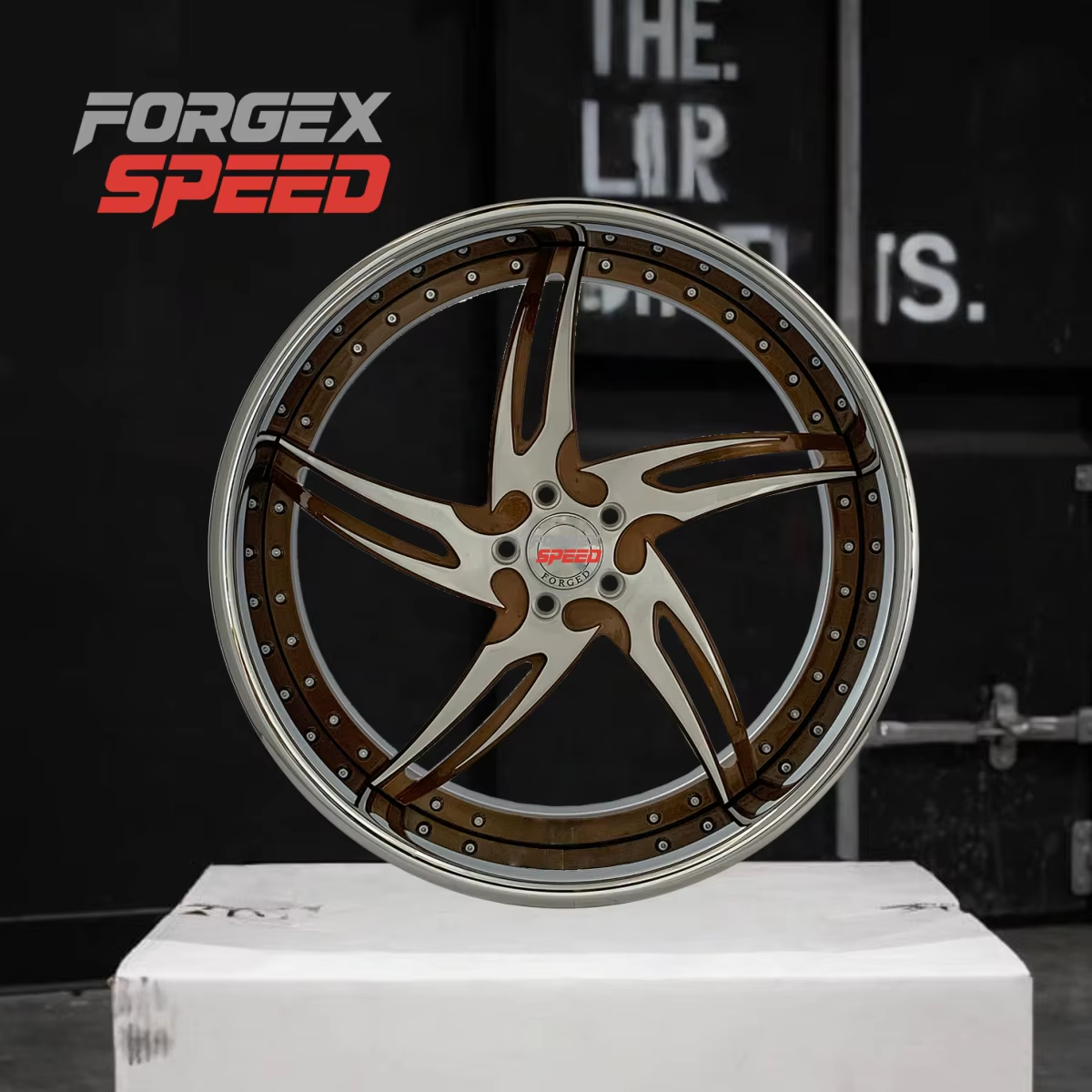
Navigating complex fitment demands a manufacturing partner who understands both the artistic nuances of vehicle stance and the strict technical rigor of global automotive standards. Forgex Speed leverages state-of-the-art high-tonnage forging presses, advanced finite element analysis validation, and comprehensive in-house engineering capabilities to deliver world-class monoblock, 2-piece, and 3-piece forged wheels. From precise custom offsets for high-performance track cars to heavy-duty, high-load-rated applications for full-size trucks and SUVs, Forgex Speed provides robust OEM, ODM, and private-label supply chain services that empower brands and distributors worldwide. By combining deep technical expertise with rigorous quality assurance and global market experience, Forgex Speed transforms complex fitment challenges into reliable, high-performance commercial advantages for industry partners.