 EN
EN
What Even Is Load Rating, Anyway?
A wheel's load rating means how much weight it can carry. This isn't an arbitrary number. There are plenty of regulations a wheel has to pass before it can even be sold to consumers. Each country has their requirements. In the US, it's DOT. In Japan, it's JWL/VIA, and in Europe it's TUV. With testing from these countries, we can trust the wheel's load rating to be adequate. Certain forgded wheels, for example, are tested on trails with a lot of weight to ensure nothing happens to the wheel. It's important to remember that load rating isn't just about weight. It's about how safe you can load the wheel.
Why Trucks and SUVs Should Consider Load Rating
Unlike sedans, trucks and SUVs tend to be much heavier and carry more weight. Tools, camping gear, full crews... and some even go off-roading. That means more stress on the wheels. Imagine a full-size truck and you buy wheels that have a load rating underneath what the truck needs. This could mean bent rims, uneven tire wear, and maybe even wheel failure while you’re driving down the highway. I’ve seen this. A friend picked out some fancy wheels for his SUV, and didn’t even check the load rating. He ended up cracking a rim after just one weekend of towing a small trailer. On the other hand, wheels for trucks and SUVs, especially off road models, have higher load ratings. They are designed to manage extra weight and more difficult conditions, so you don’t have to cut trips short or, even worse.
How to Interpret Load Rating Numbers
In order to answer this question, no mechanical expertise is needed, just know where to look. Load ratings for most forged wheels are inscribed onto the wheel itself, and are listed in either pounds (lbs) or kilograms (kg). A wheel that says “1652 lbs” is able to accommodate wheel loads of 1652 lbs. The important part is ensuring that the load rating matches your vehicle’s requirements. In the owner’s manual, search for "single wheel load capacity" that will provide the minimum load rating the wheels must meet or exceed. For example, a wheel that has a load rating of 1652 lbs is more than sufficient if the manual states that the wheel must accommodate weight of 1500 lbs. Additionally, don’t make the assumption that all wheels of the same diameter will have the same load ratings; A sedan with 20-inch wheels and a truck with 20-inch wheels may have very different load ratings, and wheel size alone will not resolve the issue.
How Forging Increases Load Capacity
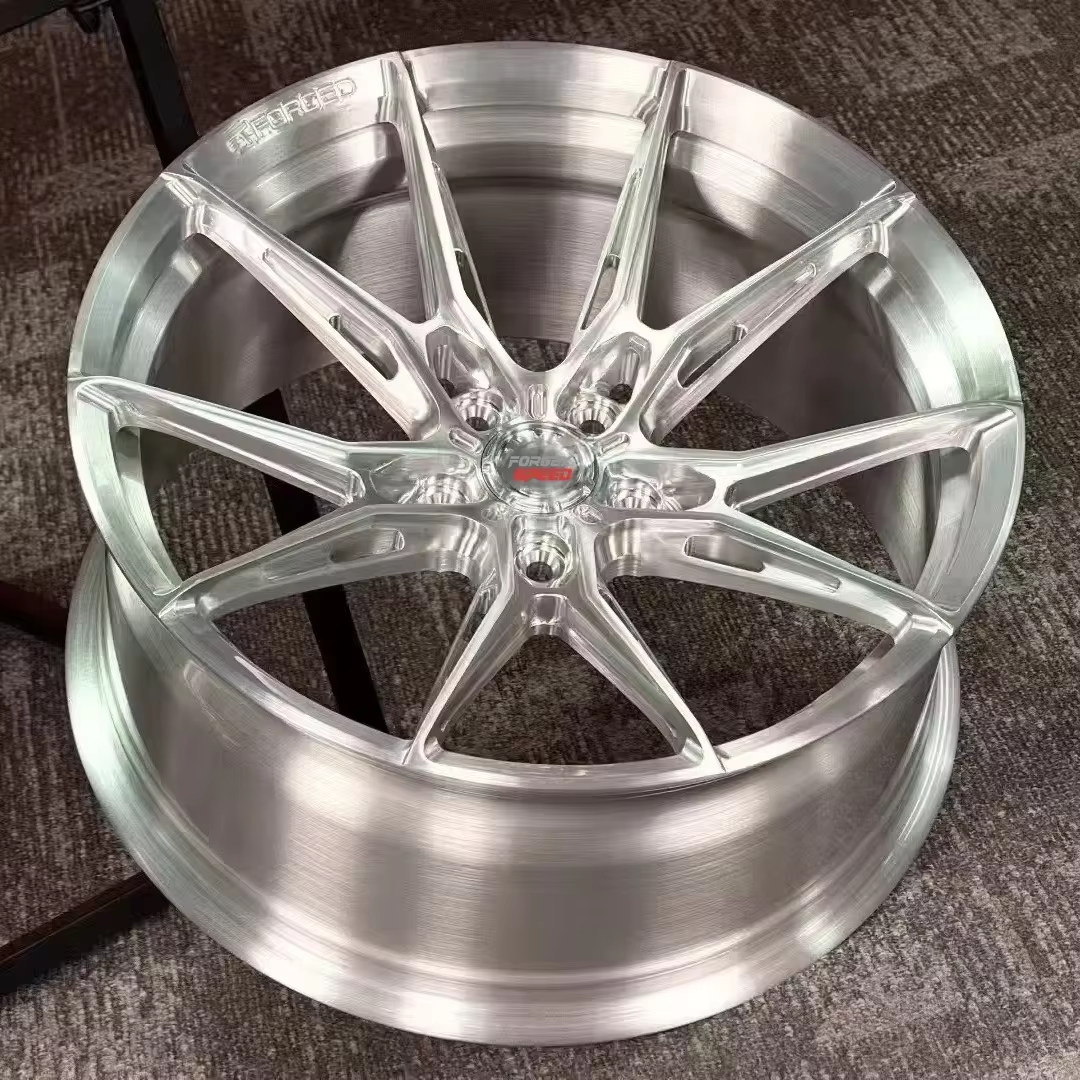
Why do forged wheels tend to have better load ratings than cast wheels? It all has to do with how they are made. Forged wheels are created by being pressed into shape at a massing of tens of thousands of tons of pressure. This is done with aerospace-grade aluminum like 6061-T6, This process creates a more dense (compared to cast wheels which are made with molds that can have tiny air bubbles that weaken the structure), more durable, and stronger wheel. With this dense structure, the wheel is able to handle higher loads without the being heavier. A forged wheel can weigh over 10% less than a cast wheel of the same size but have a load rating that is 15-20% higher. Additionally, reputable forged wheels brands manage to keep a consistent high quality by controlling the entire process from forging to finishing all in house, so every wheel is able to meet strict certifications (DOT, TUV, ECE) without any outsourcing.
Mistakes About Selecting Wheels
I'll start with errors I've witnessed when selecting truck or SUV wheels. First: Choosing wheels based on looks, disregarding load rating. Sleek rims look nice, but if they don't support the weight of your truck, they're worthless. Second: Assuming “lighter is always better”. A fuel efficient wheel is always nice to have, but not if it's designed to support light loads. A wheel that is super light but can't handle the stress of heavy use is probably going to fail sooner than later. Third: neglecting certifications. If wheels are unmarked, they are untested. DOT, JWL, or TUV wheels are the only ones that should be trusted. Those certifications mean the load rating is documented from a third party. If they don’t have loads, don’t trust the brand. Last: neglecting your vehicle's specs. Before purchasing wheels, check how much weight the load of a single wheel can support. It takes very little time and can prevent serious mistakes.
In the end, load rating brings peace of mind. While driving to a job site or camping, it’s nice to know you can throw whatever is needed at you. Forged wheels are a great option since they are strong, lightweight, and have good load capacity, but only if you have the right ones. Next time you are buying wheels, don’t solely focus on the design. Look at the load rating, check the certifications, and ensure it’s compatible with your vehicle. Your safety, and your ride will appreciate it.